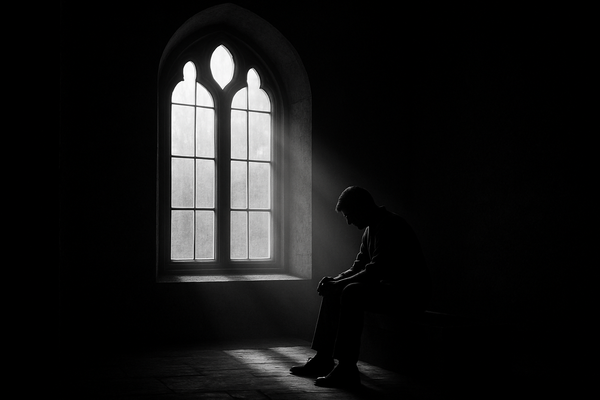
Rebuilding isn’t starting over
Rebuilding isn’t starting over. It’s learning the shape of days that feel different, carrying some things forward, and quietly letting others go.


People often talk about rebuilding as if everything is cleared away first.
As if something dramatic happens, the dust settles, and you begin again with a clean slate.
That hasn’t been my experience at all.
Nothing was cleared.
Nothing reset.
There was no fresh start waiting on the other side.
What I’ve found instead is that rebuilding happens around what’s still there.
I didn’t lose everything.
And that’s part of what makes rebuilding harder to describe.
Life didn’t stop and then restart. It kept going — just differently. Some things were taken away, some things were altered, and some things stayed stubbornly unchanged. The world didn’t pause long enough for me to catch up to it.
There was no clear moment where rebuilding began. No line in the sand. Just a gradual awareness that what used to fit… didn’t anymore.
Rebuilding, for me, has meant learning the shape of an ordinary day again.
The days feel shorter now — not because there are fewer hours in them, but because I have less energy left by the end. Things I once did without thinking now carry a cost I have to account for. I measure days differently. By what’s left, not what gets done.
To most people, I probably look much the same. I don’t think the difference is always visible. But I feel it — quietly, constantly. It’s like living slightly out of sync with the version of me people remember.
I feel different, but I don’t fully understand that difference yet.
Sometimes I feel like a version of myself I’m still getting to know. Not broken. Not new. Just unfamiliar. There are days when that feels unsettling, and others when it feels oddly honest.
And there’s something else that surprised me.
I’m not sure I want all of the old me back.
Not everything that defined me before feels worth recovering. Some habits, some expectations, some ways of pushing through — they belonged to a life that no longer exists. Rebuilding has involved deciding, quietly and without drama, what gets carried forward and what doesn’t.
There’s also a strange grief in this process that I didn’t expect.
You’re not mourning the past as a whole — you’re mourning specific things. Particular freedoms. Certain assumptions. The ability to move through the world without contingency plans.
And because so much remains intact, that grief can feel illegitimate. Like you should be grateful instead.
Often you are grateful.
And often you’re grieving at the same time.
Both can exist together. They do.
This feels closely linked to what I’ve written about healing — not as recovery, but as learning to live alongside what’s changed.
I used to think rebuilding meant deciding who I’d be now.
It doesn’t feel like that.
It feels more like noticing who still shows up — and making space for them. Letting go of forcing myself to perform the version of life I had planned, and accepting the one that’s actually available.
Rebuilding isn’t ambitious.
It’s patient.
It’s uneven.
It doesn’t move in straight lines.
I don’t know what the finished version looks like. I don’t think there is one.
What I do know is that rebuilding isn’t about erasing what happened or pretending it didn’t change me. It’s about finding ways to live with what’s changed — honestly, imperfectly, and without rushing toward conclusions.
That feels like enough for now.
Occasional writing about healing, rebuilding, and the quiet role technology plays.
No schedule. No noise. Just reflections when there’s something worth saying.